Indigenous-owned. Relationship-driven.204-619-7464

Indigenous Engagement & Reconciliation Program

Wading in
Cultural Waters

A practical pathway to meaningful, measurable, and sustainable action.

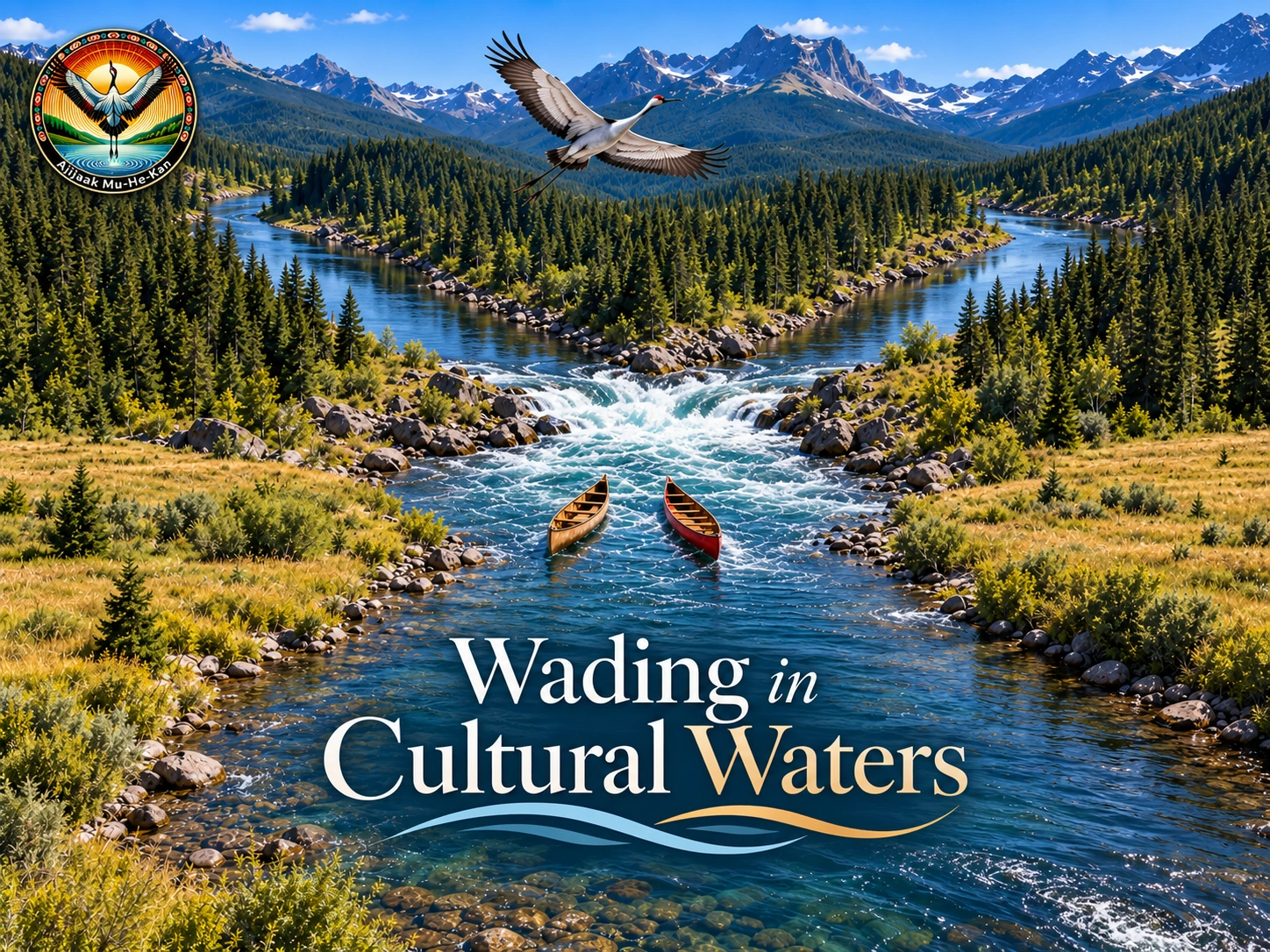
Wading in Cultural Waters: two canoes travel downstream from converging rivers, with a crane above and the Ajijaak Mu-He-Kan logo

From intention to action

Start where you are.
Build toward where you want to be.

Reconciliation is reflected in how an organization operates, makes decisions, creates opportunities, and sustains relationships over time.

Wading in Cultural Waters begins with your organization’s current practices. Our Indigenous Engagement & Reconciliation Scorecard helps identify strengths, gaps, and opportunities across five interconnected areas.

We then work together on a customized Engagement & Reconciliation Action Plan, with practical priorities that reflect your capacity, industry, geography, workforce, clientele, and existing relationships.

Discuss the program

A pathway, not a destination

Understand. Plan. Act. Keep learning.

  1. 01

    Assess

    Develop an evidence-based snapshot of your practices, relationships, and readiness.

  2. 02

    Plan

    Agree on priorities, responsibilities, timelines, and measures that fit your organization.

  3. 03

    Implement

    Build internal understanding and put commitments into practice with support where needed.

  4. 04

    Reassess

    Review progress, listen to partners, and adapt the plan as your relationships grow.

The Indigenous Engagement & Reconciliation Scorecard

Five areas.
One connected picture.

A starting point for conversation and improvement. The goal is for changes in the score to reflect changes in organizational behaviour, relationships, and outcomes.

01Physical Environment & Client Experience

How spaces, locations, visual cues, accessibility, and client-facing services contribute to an Indigenous-welcoming and culturally respectful experience.

Welcoming spaces · Local relevance · Accessible services

02Indigenous Procurement & Economic Participation

How Indigenous businesses, suppliers, contractors, and service providers participate in purchasing and economic activity, and what barriers may limit that participation.

Supplier relationships · Contracting barriers · Economic participation

03Indigenous Engagement & Community Relationships

How your organization builds, maintains, and contributes to relationships with Indigenous Nations, communities, organizations, and people over time.

Presence · Early participation · Reciprocity

04Indigenous Marketing, Communications & Public Representation

How Indigenous peoples, cultures, and relationships are represented in your communications, branding, and public activities, including consent, accuracy, and creative ownership.

Respectful representation · Cultural permissions · Action behind commitments

05Human Resources & Organizational Culture

How recruitment, retention, advancement, policies, cultural awareness, and workplace experience support Indigenous employees and meaningful reconciliation.

Employment pathways · Cultural safety · Leadership accountability

Learning that supports organizational change

The workshop series.

Workshops can stand on their own or support the understanding and capacity needed to implement your Action Plan.

Part One

Why Engagement and Reconciliation Matter

Understand the historical and contemporary context for reconciliation, the principles of Indigenous engagement, and why this work matters to organizations and communities.

  • Reflect on your intentions and assumptions
  • Connect historical understanding to present-day relationships
  • Explore respect, rights, trust, and economic inclusion
Enquire about this workshop

Part Two

What Engagement Looks Like

Move from understanding to relationship-building through intention, introductions, presence in community, cultural considerations, and reciprocity.

  • Clarify who you hope to engage and why
  • Prepare respectful, authentic introductions
  • Identify a practical next step toward a sustained relationship
Enquire about this workshop

Part Three

Built for Engagement

Explore how engagement and reconciliation become part of organizational structures, policies, workplaces, procurement, communications, and decision-making.

  • Review internal practices and potential barriers
  • Connect public commitments with organizational action
  • Build accountability and a long-term commitment
Enquire about this workshop

Focused Workshop

Reconciliation Through Employment

Examine Indigenous employment from community relationships and career exposure through recruitment, onboarding, retention, advancement, and accountability.

  • Recognize transferable skills and lived experience
  • Build culturally safe employment pathways
  • Consider employee voice, advancement, and long-term belonging
Enquire about this workshop

Supported implementation

Stay supported
as you put the plan to work.

Ajijaak Mu-He-Kan can remain involved as an advisor and implementation partner.

Support may include relationship development, policy review, procurement strategies, recruitment and retention, communications, leadership discussions, implementation teams, and periodic reassessment.

Immediate, short-, medium-, and longer-term objectives help make progress achievable. Responsibilities, timelines, indicators, and review points can be established around your organization’s needs.

Read the full program synopsisPDF · Opens in a new tab

Principles shared through our workshops

Prepared to engage.

Truth before reconciliation.

Intention before engagement.

Relationships before transactions.

Presence before expectation.

Respect before assumption.

Participation before prescription.

Reciprocity instead of charity.

Action beyond symbolism.

Evidence with accountability.

Commitment for the long term.

The next step begins with a relationship

Let’s build something
meaningful together.

Start a conversation 204-619-7464ajijaakmuhekan@gmail.com

Ajijaak Mu-He-Kan

Start a conversation

Tell us where you are today and what you hope to build.

Prepare your message here, then send it to ajijaakmuhekan@gmail.com using your email app or Gmail. Nothing is submitted until you send the email.